Since beginning my study into the Jewishness of Jesus, I have often been struck by the Jewish aspect of prayer. The blessings or Berakot that I have never noticed before, keep popping out to greet me as I peruse the text. I see the disciples and even a Gentile (Cornelius) praying at the times of prayer. I see Jesus and Paul attending Synagogue and presumably praying these ancient prayers along with the congregation. All this has led me to read whatever I can lay my hands on about ancient Jewish liturgy to discover more information on how people prayed in the the 1st Century. What was it like to pray as Jesus prayed? As I studied I found prayers that have been spoken for thousands of years. Blessings to pray in every occasion. Although this is not a direct quote, the Rabbi's theorized that enjoying something in this world and not blessing God for it, is like stealing. Prayers that were spoken in the earthly temple designed to be antiphonal to the angelic worship in the temple in heaven. It has opened up a beautiful world of praise, blessing and commitment to God that I have never known before.
Quite a number of weeks ago my sweet Mother-in-law sent me a wonderful book, that I am currently in the process of reading.
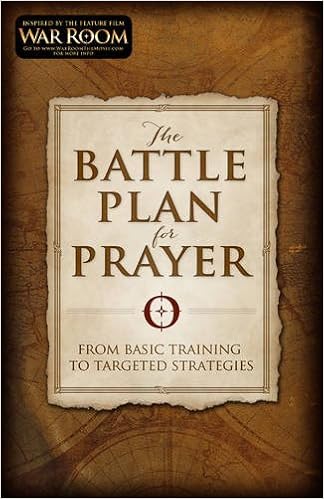
It was written to accompany the movie, "The War Room". When I got to chapter 3, "The Priority of Prayer" I was overcome by the importance of prayer in our communities.
"He proclaimed, "is it not written, "My house shall be called a house of prayer for all the nations"? But you have made it a robbers den" (Mark:11:17). With this one violent surprising motion, He distilled down the purpose of God's house and the meeting together of God's people to a central priority: believers getting together for prayer..... prioritizing prayer means prioritizing God Himself. It means prioritizing the activity of God above the activity of man. As Jesus well knew, everything else that occupies the church's time and energy will be lacking in power and blessing and the fragrance of God's presence if prayer is not kept first." --The Battle Plan for Prayer pg. 22-23and on page 24.
"A deep devotion to prayer was always connected to the success of the New Testament church. Before the Holy Spirit came down at Pentecost, the followers of Christ were, "all with one mind.... continually devoting themselves to prayer" (Acts 1:14) The word devote carries the idea of insisting on something and clinging to it.....
After God's spirit fell on them, leading to thousands being saved, the believers were again "continually devoting themselves" to prayer, among other things (Acts 2:42) Even when problems arose in the church, such as the widows feeling neglected, the apostles quickly delegated the responsibility to qualified deacons, adding, "But we will devote ourselves to prayer and to the ministry of the word." Acts 6:4"Page 25 the author goes on to draw attention to what blessings the bible seem to be to tied to prayer.
- evangelism of the lost (Col. 4:3; 1 Tim. 2:1-8)
- cultivation of discipleship (Luke 11:1-2; John 17)
- true Christian fellowship (Acts 2:42)
- wise decisions (James 1:5)
- obstacles overcome (Mark 11:22-24)
- needs met (Matt. 6:11; Luke 11:5-13)
- true worship ignited (Matt. 6:13; Acts 2:41-47
- revival sparked (2 Chron. 7:14
Prayer was vital to the early church.
Have you ever noticed that words can change over the years? One of my favorite examples is in the Laura Ingalls Wilder books. As Laura tells her stories she repeatedly talks about being gay or gay people. When I read these books to my kindergartners a few years ago, one of them objected to this term and asked why the author kept using it. I told her that originally the word meant that someone was happy and the meaning has been changed over the years.
As I read this passage from, "The Battle Plan for Prayer". I started to wonder if when we read of the early church praying, we think of it from our perspective. With all that I have been learning about prayer in Jesus day, how did those prayers fit into the life of believers in Jesus and should it concern us? If the New Testament is constantly urging us to pray, shouldn't we understand what prayer looked like to the authors using the word?

Being much further along in the book, I had to go back to the chapters you were referring to, I know on page 24, it says that "prayer at its heart, is communicating with God". Reverently, openly sincerely interacting "directly" with the magnificent God of the universe who is really there. Maybe the disciples felt that prayer was more of a repetitiousness of words. Truly, prayer is more than just getting down on your knees, prostrating yourself before God, or secretly just going through the motions of praying - almost like a duty or task to be done.
ReplyDeleteI have found and am still learning that prayer is so intimate that I find myself not even wanting to pray out loud in the presence of others because, I don't want it to sound like a performance on my part. Prayer is a personal conversation with God.
It also states that every prayer that is answered is a given opportunity to show others of Gods glory and His answering of our prayers. One thing that I am adding in my prayers is that in my daily walk, help me to glorify Him. Give me the opportunity to show God to someone else through my actions or deeds. And believe me, that prayer has not gone unanswered because God has put experiences in my path right that very day.
In chapter 5 it talks about what prayer is or isn't. You sure don't want it to be a form of appeasement to others. Yet even as we open our hearts to Him in prayer, we can even fool/deceive our own self on Who we are praying to and that we are truly in His presence when we come to Him in prayer.
I think how I have fallen asleep when praying and feel so guilty. But didn't the disciples do that in the garden before Jesus was taken away? It shows our own human frailness.
At the end of chapter 5 it states" prayer is not about prayer. It is about a Person, God Himself. When it becomes merely about accessing the provision or protection of God rather than knowing and pleasing the Person of God, that is when we are getting off track. But when the one goal of our praying is to live in relationship with Him - one on One - He will cause prayer to also help us experience His purposes, His plans, His provision, His protection and everything else He intends".
I know every book is not perfect and always theologically correct. It is the writers viewpoint of what they feel. Sometimes they are right and sometimes wrong. But again, I say that prayer is so intimate to me. It is like getting on the operating table and asking God to perform open heart surgery on me. I am naked, lying there on the table.
I don't want my prayers to be mindless, empty or just words. I want it to be a personal experience each time I come before God. Even further on down in the book, I have read how God likes to be addressed according to this author. And immediately, I feel, oh my, I haven't even been addressing Him correctly. Then my mind falls back on to the thief on the cross when he looked at Jesus knowing that He was no ordinary Man, and said "Remember me in Your kingdom."
Mom, I'm so honored to have your comment to be the first on my blog, thank-you for sharing your thoughts with me.
ReplyDelete