Friday, May 29, 2020

Living Shavuot and God's Righteousness in Today's World

Can we just stop with the comment, “come Lord Jesus” when we see the wrongs in society? I know this is going to be a controversial statement. So let me explain. As I have been scrolling through Facebook, my heart breaking at what is going on in society right now. I have seen some expressing their sadness about what is happening and then ending their statements with, “come Lord Jesus”.

Now I understand where they are coming from, but I wonder if this statement is actually more harmful than helpful. The comment, “come Lord Jesus” implies that we have surrendered to the false narrative that we can really do nothing to change society because this world is inherently evil, instead we have to wait until Jesus comes for things to improve. The danger in this thought process is that the very people that should be doing the most to influence society and to stand up for the oppressed, will withdraw into their insular communities to wait for the end.This in no way is what God has called us to do.

From the very beginning God has called us to be influencers, His partners in mission. In fact, today of all days, calls us out to be the change in society. Today is Shavuot, the day when God descended on Mt. Sinai and gave His teaching to the Israelites. This teaching calls for justice for the oppressed, help for the poor, and checks on the powerful. It calls for people to be involved in government. It rails against people being talebearers (read gossips) and even for people to call out their neighbor if they see them going down the wrong path. Leviticus 19:15-19 None of these things were directly enforced by God, but all had to be instituted by the people and their earthly government.

The prophets take it even further. Read through the book of Isaiah and you will find that although idolatry is mentioned, Isaiah is far more often protesting against the abuses of the poor, the widow and the foreigner. He even says that the people’s correct worship of God, sacrifices, Sabbath keeping, and Yom Kippur, is hateful to God if they are still abusing their fellowmen while worshiping Him. Read Isaiah 1:10-31 and Isaiah 58 and really the whole book of Isaiah. 

In Isaiah 1:27 it literally says, 

“Zion shall be redeemed with justice,
And her penitents with righteousness.”

Notice, at least here it DOES NOT say that God is the only one who redeems Zion, although, admittedly, it does say that in other places. Instead God says that Zion shall be redeemed with justice and her penitents (those who have repented) will be redeemed with righteousness. Righteousness in the Old Testament is always about justice and righting the wrongs and imbalances in the world.

But what about the New Testament? Didn’t Jesus say we should be focused on his second coming and the signs thereof? Didn’t he say, “wait for him to come back for change to happen?” Well, let’s take a look at the Olivet discourse, one of the favorite passages of those looking for the end times. Matthew 24 talks about events that will happen up until Jesus coming, warns people that no one knows when it will be, and ends with a parable warning people not to think that because Jesus hasn’t shown up yet, it does not mean they can start oppressing their fellow workers.

But the discourse doesn’t end there, it continues into Matthew 25. For the sake of time we will skip over the two parables and go straight to the end of the discussion Jesus is having with his disciples. Here, Jesus warns that when the Son of Man comes in his glory he will repay people not for, hoping and believing in him, or in hoping and waiting for the second coming, or knowing the end time prophecies. Instead he tells them, “the King will say to those on His right hand, ‘Come, you blessed of My Father, inherit the kingdom prepared for you from the foundation of the world: for I was hungry and you gave Me food; I was thirsty and you gave Me drink; I was a stranger and you took Me in; I was naked and you clothed Me; I was sick and you visited Me; I was in prison and you came to Me.” In the very next line these people are called righteous. Again righteousness in the bible, with the possible exception of the writings of Paul, is always associated with Justice. Justice for those who have none.

Fellow believers, this is the time. It is now. We must stand for change in our society. When we see war and oppression, brutality and injustice, we have no right to sit back and wait for Jesus to fix it all. We need to be doing what God has always called us to do, take care of others, strive for a moral government, care for others, right the wrongs and injustices and improve our society. This is the partnership God calls us to, our mission in the world He created and designed for us to enjoy.

Monday, October 3, 2016

Behavior, the Original Evangelism

Recently I have had the privilege to be part of two discussions about how to reach the unchurched.  One was a theoretical group dialogue drawing out our thoughts on how to reach a generation who no longer even believe in a god. The other, more personal, with dear friends who are down in the trenches everyday trying to reach people who have no thought for the future.  The population that they work with live only to survive the day, or at the lengthiest, the week.  The first group feels no need of God because He is irrelevant to them.  The latter group is hard to reach because what need do they have of being saved for heaven, when they are barely surviving here on the earth?

These two conversations lingered with me the last few weeks.  More and more, evangelism as we know it, isn't working.  People no longer respond well to tracts, to a stranger knocking on their door to sell them books, or even to the evangelist that comes to town.  Because our culture used to be majority Christian, previously all of these tactics worked.  Everyone would go to hear the traveling evangelist come to town, because entertainment was not as easy to come by only some short decades ago.  However, more and more our culture not only thinks God is irrelevant, but there are a growing number of people don't even believe that there is one, except to use His title and name as a curse word.  And as for my friend in the trenches, how do you reach people so broken that they can't even comprehend the future week, let alone some heaven up in outer space? They need someone to save them from the hell they are in, not the future one where they might end up.  

Because I've been doing some research on prayer in the early church, I have been reading a few books about worship in the first few centuries of the church's existence.  First, I was reminded that even the English word "worship"  has evolved over the past 500 years.  Today we think of worship as something that we go to do at church on Sabbath or Sunday morning or even a style of music that we sing.  But to the translators of the King James Bible it meant something quite different.  This is illustrated by the vows of a sixteenth century groom who pledged to his bride: "With this ring I thee wed; this gold and silver I thee give; with my body I thee worship; and withal my worldly goods I thee endow."  
"the sixteenth-century groom was referring not to "worship" of his wife as some inward disposition that he would manifest from that point on but to what he was actually doing by giving his bride tokens of his property, including a ring.  This sharing of wealth was itself "worship"-- a ritual, but also a literal form of reverent service, the founding example of a set of acts and dispositions inherent in a marriage rather than merely a sign pointing to them." -"Ancient Christian Worship by Andrew B. McGowan, Pg. 2
The King James bible takes this word worship and uses it to translate Hebrew and Greek words about obedience, service, and physical acts related to them.
"The wider reality, or "worship" is obedience or service, not gatherings, nor beliefs, nor song, nor ritual, except within that wider whole.  Prayer and communal ritual nevertheless served, along with personal and physical acts of bodily "worship," to create and express that obedience and service.  For the ancients, therefore, such language was not specifically about liturgy any more than it was about music, and it had as much to do with what we would call politics and ethics as with what we call worship  -Ancient Christian Worship by Andrew B. McGowan, pg.3
Worship then, although it includes church service like activities, is all encompassing.  For Israel every time they fulfilled a law in Torah they were worshiping God. Worship then has more to do with obedience than what songs you sing in church on Sabbath.  But what does this have to do with original evangelism.  In Deuteronomy God gives this reason for the laws and statutes that He has given to Israel.
 " 5 See, I have taught you statutes and rules, as the Lord my God commanded me, that you should do them in the land that you are entering to take possession of it. 6 Keep them and do them, for that will be your wisdom and your understanding in the sight of the peoples, who, when they hear all these statutes, will say, ‘Surely this great nation is a wise and understanding people.’ 7 For what great nation is there that has a god so near to it as the Lord our God is to us, whenever we call upon him? 8 And what great nation is there, that has statutes and rules so righteous as all this law that I set before you today?" Deuteronomy 4:5-8
It seems that God's original evangelism plan was for Israel to live out the Torah He had given them and by their actions other nations would be attracted to how great God was.  All they had to do was "worship".  But did this plan stay the same through the centuries?

My mind had been pondering this ancient definition of worship, when I stumbled across this amazing premise from Paul F. Bradshaw, in his book, "Reconstructing Early Christian Worship".  He argues very convincingly in his chapter on baptism, that in the early church baptismal candidates were not taught doctrines, or even the gospels until after baptism.  He concludes the chapter with these thought provoking paragraphs.
"I realize that to some this suggestion may sound much to preposterous to be taken seriously.  How could pagans possibly have been attracted to Christianity, and how could they have been converted to the faith and been willing to prepare for baptism, if the contents of the Gospels had never been fully revealed to them?" - Reconstructing Early Christian Worship by Paul F. Bradshaw pg. 67
He then goes on to admit that certain early Christian writers themselves knew of Pagans who had  some knowledge about Jesus an idea of what he taught. However, he cautions us not to read presuppositions from our age back into the ancient one.
"We tend to assume that in order for a person to be drawn into a religious sect, it must be the central doctrines of that sect which attract them and win them over, causing them to change their lifestyle.  In other words, we see the sequence as: believing first, belonging second, behaving third. But this is not necessarily always true... In particular, the scrutiny of baptismal candidates" (in the early church) "were asked if they lived virtuously while they were catechumens, if they honored the widows, and if they visited those who are sick, and if they fulfilled every good work.
 Thus, it rather looks as though it was behaving that was the prerequisite to belonging in the early church, and that at least some believing might have been expected to come later.  Indeed, it appears to have been the behavior of Christians rather than their beliefs as such that was the principal attraction to the movement for pagans and the most effective means of evangelization.  Christians would thus not have needed to tell them everything about the gospel in order to draw them in to the catechumenate."  pg. 68 (Italics mine)
Those closing paragraphs floored me.  Not only because of the obvious, that pagans might not have studied out all of the beliefs of the church before being baptized, or that behavior was a prerequisite for joining the church, but that behavior of the Christians was the main source of evangelism.  My mind immediately went back to God's original evangelism plan in Deuteronomy.

 I personally am not sure I would make the cut if I was trying to convert to Christianity in the 1st through 3rd century.  Granted our culture is different.  Widows are not left completely destitute, just because they are widows. Most of the sick already have doctors to take care of them, and I'm learning that probably even some of the "good works" in the early church might be a little different from "good works" in our culture.  But while those "works" maybe aren't as needed any more, although still important, what about the other side of the coin?  As a Christian, am I living out God's ways so completely that I would attract a non-believer to God?  Without knowing anything about Jesus, would someone want to be baptized into my way of life just because of what they saw in mine? Because although our ways of bringing people to God in the last 2000 years have changed, I'm not so sure God's have. Is He still waiting for our "worship" to attract the peoples to the Kingdom? My friends in the trenches are already doing this, how can I join them? Points for me to ponder over throughout these Days of Awe.


Sunday, September 4, 2016

The Battle Plan for Prayer Pt. 1


Since beginning my study into the Jewishness of Jesus, I have often been struck by the Jewish aspect of prayer.  The blessings or Berakot that I have never noticed before, keep popping out to greet me as I peruse the text.  I see the disciples and even a Gentile (Cornelius) praying at the times of prayer.  I see Jesus and Paul attending Synagogue and presumably praying these ancient prayers along with the congregation.  All this has led me to read whatever I can lay my hands on about ancient Jewish liturgy to discover more information on how people prayed in the the 1st Century.  What was it like to pray as Jesus prayed?  As I studied I found prayers that have been spoken for thousands of years. Blessings to pray in every occasion.  Although this is not a direct quote, the Rabbi's theorized that enjoying something in this world and not blessing God for it, is like stealing.  Prayers that were spoken in the earthly temple designed to be antiphonal to the angelic worship in the temple in heaven. It has opened up a beautiful world of praise, blessing and commitment to God that I have never known before.

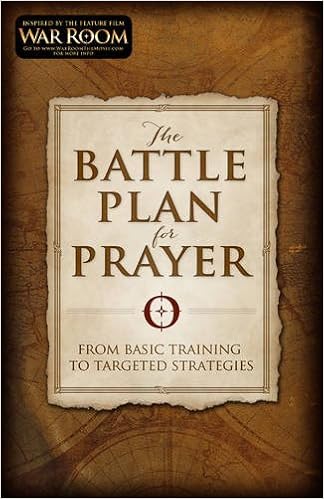
Quite a number of weeks ago my sweet Mother-in-law sent me a wonderful book, that I am currently in the process of reading.


It was written to accompany the movie, "The War Room".  When I got to chapter 3, "The Priority of Prayer" I was overcome by the importance of prayer in our communities.

"He proclaimed, "is it not written, "My house shall be called a house of prayer for all the nations"? But you have made it a robbers den" (Mark:11:17).  With this one violent surprising motion, He distilled down the purpose of God's house and the meeting together of God's people to a central priority: believers getting together for prayer.....  prioritizing prayer means prioritizing God Himself.  It means prioritizing the activity of God above the activity of man.  As Jesus well knew, everything else that occupies the church's time and energy will be lacking in power and blessing and the fragrance of God's presence if prayer is not kept first."  --The Battle Plan for Prayer pg. 22-23
 and on page 24.
"A deep devotion to prayer was always connected to the success of the New Testament church.  Before the Holy Spirit came down at Pentecost, the followers of Christ were, "all with one mind.... continually devoting themselves to prayer" (Acts 1:14)  The word devote carries the idea of insisting on something and clinging to it..... 
 After God's spirit fell on them, leading to thousands being saved, the believers were again "continually devoting themselves" to prayer, among other things (Acts 2:42)  Even when problems arose in the church, such as the widows feeling neglected, the apostles quickly delegated the responsibility to qualified deacons, adding, "But we will devote ourselves to prayer and to the ministry of the word." Acts 6:4"
Page 25 the author goes on to draw attention to what blessings the bible seem to be to tied to prayer.
  • evangelism of the lost (Col. 4:3; 1 Tim. 2:1-8)
  • cultivation of discipleship (Luke 11:1-2; John 17)
  • true Christian fellowship (Acts 2:42)
  • wise decisions (James 1:5)
  • obstacles overcome (Mark 11:22-24)
  • needs met (Matt. 6:11; Luke 11:5-13)
  • true worship ignited (Matt. 6:13; Acts 2:41-47
  • revival sparked (2 Chron. 7:14

Prayer was vital to the early church.

Have you ever noticed that words can change over the years?  One of my favorite examples is in the Laura Ingalls Wilder books. As Laura tells her stories she repeatedly talks about being gay or gay people.  When I read these books to my kindergartners a few years ago, one of them objected to this term and asked why the author kept using it.  I told her that originally the word meant that someone was happy and the meaning has been changed over the years.

As I read this passage from, "The Battle Plan for Prayer".  I started to wonder if when we read of the early church praying, we think of it from our perspective.  With all that I have been learning about prayer in Jesus day, how did those prayers fit into the life of believers in Jesus and should it concern us?  If the New Testament is constantly urging us to pray, shouldn't we understand what prayer looked like to the authors using the word?


Wednesday, July 13, 2016

Who Do We Serve?

While reading, "How To Read Job" this morning, I was struck by this fact from the chapter "Job in the context of the Ancient Near East".  

"In the ancient Near East, people believed that no one could accomplish everything that the gods required so there would always be something to anger the gods.  Nothing could be done about this but strive for a higher degree of piety and call out for mercy upon the inevitable failure." 

As I read this, I couldn't help but marvel at the graciousness of our God.  Unlike the pagan deities surrounding Israel, Yahweh descended on Mount Sinai in full view of His people and explained exactly how His kingdom worked and what kinds of things offended Him and pleased Him.  His law was not one that could not be followed like the pagan gods. What a relief this must have been to the Israelites. In fact, unlike the pagan deities who don't seem to care if humans live or die, one of His great concerns was that His people would do something that would get them killed, which is why He is always telling them not to bring abominations or uncleaness into the camp.  He even tells the Levites that they were to surround the Tabernacle with their tents.  This provided a barrier to protect the people from God's Holiness by getting to close when they were unclean, causing them to be struck down. Numbers 1:52-53    

Moses separates Yahweh from the pagan view of pleasing their gods when he says, 
"11 “For this commandment which I command you today is not too mysterious for you, nor is it far off. 12 It is not in heaven, that you should say, ‘Who will ascend into heaven for us and bring it to us, that we may hear it and do it?’ 13 Nor is it beyond the sea, that you should say, ‘Who will go over the sea for us and bring it to us, that we may hear it and do it?’ 14 But the word is very near you, in your mouth and in your heart, that you may do it. Deuteronomy 30:11-14
The New Testament makes it clear it's authors also believed that God had given His law believing it could be kept, when writing this description of Zachariah and Elizabeth.
6 And they were both righteous before God, walking in all the commandments and ordinances of the Lord blameless. Luke 1:6 
When you compare the two systems of thought it comes as no surprise God's people were so grateful for the Torah and, at least after the Babylonian exile, saw it as a treasure.  No wonder the longest Psalm (Psalms 119) is written extolling the virtues of the Torah and the author's love for it. Remember every time the author writes law in this psalm the Hebrew word used is Torah, usually, but not always, understood as the first 5 books of Moses.  

It is easy to understand the clear joy that the Psalmist finds in the law when comparing the Torah with the despair found in this pagan Ancient Near East song known as, "I Will Praise the God of Wisdom.
"I wish I knew that these things were pleasing to one's god! What is proper to oneself is an offence to one's god.  What in one's own heart seems despicable is proper to one's god.  Who knows the will of the gods in heaven?  Who understands the plans of the underworld gods?  Where have mortals learnt the way of a god?" 
No wonder the Psalmist declares,
"The law of Your mouth is better to me than thousands of coins of gold and silver." 
It is also easier to understand why Moses said that the nations would be attracted to Israel if they (Israel) were faithful to follow God's requirements,
" 6 Therefore be careful to observe them; for this is your wisdom and your understanding in the sight of the peoples who will hear all these statutes, and say, ‘Surely this great nation is a wise and understanding people.’7 “For what great nation is there that has God so near to it, as the Lord our God is to us, for whatever reason we may call upon Him? 8 And what great nation is there that has such statutes and righteous judgments as are in all this law which I set before you this day?" Deuteronomy 4:6-8
These really are the reasons we should take joy in the law today.  God has shown us how to be close to Him and live out His kingdom.  Hopefully it is a blessing we will take delight in.
 

Wednesday, October 14, 2015

Is There Place in Modern Christianity for the God of the Torah?

One of my favorite celebrations of the year occurred a little over a week ago.  The holiday of Simchat Torah or the celebration of the Torah is the day when you finish reading the last part of Deuteronomy and rewind the Torah, the first five books of the bible, back to Genesis 1.  It is a day of dancing and rejoicing over the gift of the very words of God, as embodied in the verses of Genesis through Deuteronomy. But while our Jewish brothers and sisters are rejoicing in God’s word, it seems as if Christian culture of today is often more embarrassed by the Torah than they are interested in reveling in the life that God promises is found within these pages.  While I hope I’m overstating it, the push separate to the “God of the Old Testament” from the “God of the New Testament” hasn’t seemed so strong since the days of Marcion.  This is troubling to me.  The Torah is the foundation of the rest of the book.  If we do not believe what is written in these pages, should we even claim to follow the God we serve?  God reminds us over and over that He does not change (Numbers 23:19, Psalm 55:19, 1 Samuel 15:29, Malachi 3:6, James 1:17).  So why does there seem to be a growing trend in Christianity to say that the “God of the Old Testament”  has now changed from an angry, vengeful God to the loving, accepting, “God of the “New Testament”?  Could it be that we read some of the things God says in the Torah and it offends our modern cultural ideals? Could it be that we are embarrassed of some of the things that the Torah says?  Or maybe only what we think it says?  In my mind when we deny the “God of the Old Testament” we are taking away any and all reasons for us to be Christians in the first place and we bring dishonor to the God that we love.  Let me show you what I mean.

Quite a number of months ago I happened across a clip from Bill Maher’s show featuring Christian author, Ralph Reed.  By drawing attention to this interview, I am not in any way trying to denigrate Ralph Reed, it takes guts for a Christian to go on a show where you know you are going to be belittled and mocked for your beliefs and I greatly respect him for doing so.  My reasoning for highlighting this dialogue is I feel it illustrates the general Christian attitude about the 5 books of the bible that are the foundation of the rest of the story.  I will warn you before you watch, that Bill Maher blasphemes God and uses foul language.  If you do not care to watch I have briefly highlighted the arguments I find so troubling in the coming paragraphs.


As much as it hurts me to hear Bill Maher cursing God here, it hurts me more that as Christians we cannot answer these accusations or worse we actually think that Bill Maher is correct.  The first item in Maher’s attack was Paul’s advice for slaves to submit to their masters at the time of the Roman Empire.  I do not want to spend a lot of time on it, because you would have to write volumes.  But let’s just say the word slavery is actually in the bible and so is the practice.  However, it was not instituted by God, it was just regulated.  If slave owners in the South had followed the laws of Torah slavery in the American form would never have existed.  First of all the Torah outlaws kidnapping, so stealing people and bringing them over from Africa is out, with the added benefit that all of the slave dealers who did practice kidnapping would have been sentenced to death.  “Slavery” in the bible was set up for people who had no way to provide for themselves.  Although the concept is very different from our culture, people who had no way to provide for themselves or their families could “sell” themselves to someone else, instead of starving.  These slaves were not considered chattel or animals as they were in America. The person who "bought" them had to provide all the necessities of life for them.  They were required by Torah law to have one day a week off (Sabbath) and were included in the list of people God expected his people to bring to Jerusalem at the various festivals and party with. A Hebrew slave was supposed to be set free every seven years.  Furthermore, what Bill Maher nor Ralph Reed apparently knew, was that if a slave, even a foreign one, ran away from his master you were required to help them and shelter them.  Now I’m not going to try and mislead you there are differences in the rules about a Hebrew Slave and a Foreign Slave.  But I will have to go into this at a different time, because it goes beyond the scope of this blog post.  However, my guess is, if you look closely at these laws you will find as ever, that God is always merciful and loving.

Next Bill Maher tries to strong arm Ralph Reed with the claim that the “Old Testament” condemns a woman to death by stoning for the act of pre-marital sex.  What troubles me the most about this exchange is that Reed seems to accept this statement as true, but tries to justify it by explaining to Maher that it doesn’t matter anymore because Jesus changed all that. His acceptance of the "truth" of Maher’s statement, brings about Maher’s next somewhat logical conclusions. He states, “If the bible is the perfect book, written by the perfect guy, why did Jesus need to come along and correct His dad?” Ralph Reed again tries to counter with, “but we are under a New Covenant now.”  Bill follows up, “So it’s the Old Testament Jew God. He’s bad.” Followed by some other very disparaging remarks about the God of the Torah. Fellow Christian we have already established the fact that God DOES NOT change.  Jesus declares that, “He and the Father are one.” John 10:30.  So if what Bill Maher said about your God is true and a girl is under the death penalty for pre-marital sex in the Law of Moses, God has not changed.  Is that the God you serve?  If the God of the Torah is so terrible how can we allow Psalms 119 to even be scripture? Here are just the first two verses of a very long Psalm dedicated to how wonderful God's law is.  "How happy are those whose way of life is blameless, who live by the Torah of Adonai!  How happy are those who observe his instruction, who seek him wholeheartedly!" How could David pen these words?  Let’s take a look and find out.

First of all before we even go into whether or not a girl could be stoned for this offense.  I would like to point out that there are sins that are punished by capital punishment in the bible.  BUT ALL capital crimes REQUIRE two eye witnesses.  This means you have to have two people actually witness the crime for the court to put someone to death, no circumstantial evidence allowed.  How many people would be on death row today if this were the standard in today’s courts?  Another law to note, especially in a capital case,  but also applicable to any case where someone is being charged with a punishable offense, if a witness is caught telling a lie in their testimony, the judgement that they were trying to get the defendant convicted of, would now be turned around on them.  How many modern witnesses would be more careful of their testimonies, if this was a possible consequence in our court system?

So even IF there was a provision for a woman to be stoned for having pre-marital sex, there would have to be two eye witnesses to her act, for judgement to be carried out.  However, we don’t even need to worry about that provision, because a law sentencing a woman to death for pre-marital sex is simply non-existent in the Torah.  Although some of the laws toward women in the Torah, sound harsh when you look at them on the surface, when you dig deeper, you find that they are ALWAYS about protecting women from men who culturally might be able to take advantage of them.  However, in the case of the laws about pre-marital sex you do not even have to dig below the surface, even at face value, they ARE COMPLETELY about protecting a woman from a man that might use her and cast her aside.  Let’s take a look.   “If a man seduces a virgin who is not pledged to be married and sleeps with her, he must pay the bride-price, and she shall be his wife. 17 If her father absolutely refuses to give her to him, he must still pay the bride-price for virgins.” Exodus 22:16-17.  As we see there is no stoning here…  Only a law to make sure that a man takes responsibility for whom he decides to sleep with.  Even if he does not walk away with a bride, because her Father might be unsure he will make a fit husband for his daughter, the Seducer must pay the bride price so that the girl will be taken care of the rest of her life.  And if her father does consent, husbands were require to provide their wives with food, clothing, and shall we say it?  Sex.  Unlike what many Christians believe about biblical marriage, sex was the woman’s right, not the man’s.   So now that this man has seduced this virgin of Israel, he cannot just cast her off, as we find so many men doing today with the women they are sleeping with.  He must marry her and is required by law to provide all of those things for her the rest of her life even if, in a drastic case she wants nothing more to do with him. How many men would be sleeping around and making babies with many different women if this was still the law today? 


Christians, it is time that we stop being embarrassed about the first three quarters of our bible.  I’m not going to deny that there are laws in given in the Torah that are hard to understand. But it is about time we faced them and tried to understand what they were all about, even if it is scary to our modern sensibilites.  We have already established the fact that God does not change.  Since, Jesus states that He and the Father are one, we cannot separate him away from the Torah.  In fact, Jesus declares in the gospel of John, that if you do not believe Moses you will not believe him.  How many of us are trying to shove Moses under the rug?  The God of the New Testament is the same God of the Old Testament.  If we separate the Old Testament God from the New Testament God, aren’t we just committing idolatry by creating our own God?  We must stand up for our God and His word. Bill Maher in all his blasphemy has a point, if we as Christians deny the God of the Old Testament, aren’t we really just denying the God of the new, because just as the “Old Testament” declares God does not change, Hebrews 13:8 proclaims, “Jesus Christ is the same yesterday and today and forever.”  Maybe it is time we joined in the celebration of Torah and declare with David, “The Torah you have spoken means more to me than a fortune in gold and silver.” Psalms 119:72

Monday, September 28, 2015

A Case For the Festivals

As I write, I am sitting in my cozy Sukkah enjoying a sleepy fall morning.  Last evening was spent with friends - laughing, enjoying good food, singing, blessing God, and of course feeling silly while shaking the lulav.  This is our third year celebrating the Sukkot, the Levitical feast of booths or tabernacles.  Every different set apart time on God’s Calendar in Leviticus 23, blesses me in a different way. Sukkot in particular, makes me long for the Messianic Age, when there will be no more parting.   This morning while we were cooking our breakfast in the backyard, I daydreamed about how much fun it would be if all of our family and friends had built Sukkot in our backyard and were right now joining us for breakfast.  What a joyous occasion that would be!!

Although we have not personally experienced it, in my research and readings on what the festivals mean to Christians, I have often encountered a unexplainable prejudice toward actually keeping these appointed times. Some Christians actually theorize that if you keep these festivals you are denying Jesus sacrifice for you.  It is often said they are Jewish festivals, not meant to be kept by Christians.  This is a bias that I have a hard time understanding.  I in no way believe that you have to keep these festivals to be “saved”, but I also cannot understand why we, Christians, ever gave up these appointed times of joy.  Take for example the Christian holiday of Christmas, no one believes that you have to celebrate Christmas to be saved, and yet there are not many Christians who do not celebrate this man made day of remembrance.  Why?  Do we do it to be saved?  No!!  Christians celebrate Christmas because they see it as a remembrance of Christ’s birth.  How much more should we take pleasure in what God calls HIS FEASTS?

When God laid out what he called His feasts, in Leviticus 23, most if not all of the Israelites did not know that they pointed forward to a future event. They were simply a remembrance of past experiences. The list begins with the weekly Sabbath, which of course is a reminder of creation and the fact that God rested from His creative activity on the seventh day.  The purpose of Passover/Unleavened Bread was to recall God’s deliverance from Egypt. Shavuot was connected to the giving of the law on Mt. Sinai, although whether this was a connection made later or at the time of its institution is not really known.  Feast of Trumpets, or what is called Rosh Hashanah today, is called a day for remembrance when God instituted it, although God does not say what you are supposed to remember.  The Rabbi’s later connected it to the day that Adam and Eve were created, and thus on that day God was crowned King of the World.  Yom Kippur does not appear to have any past event connected with it.  However if you do a little math, you find that Yom Kippur lines up very closely with the day that God forgave Israel for their worship of the Golden Calf.  On that day He once again promised that He would go before them into the land, instead of just sending His angel.  We certainly might be able to draw a logical conclusion then, that Yom Kippur might be a day to remember God’s great forgiveness in the past.  Looking at the day through this event, helps explains why Jews today believe that individual judgement for the following year is sealed at the end of every Yom Kippur.  The solemn day of Judgement is followed by a seven day festival of rejoicing that lasts 8 days.  This week too is for remembering.  “Ye shall keep it a feast unto the LORD seven days in the year.  It shall be a statute forever in your generations: ye shall celebrate it in the seventh month.  Ye shall dwell in booths seven days; all that are Israelites born shall dwell in booths:  That your generations may know that I made the children of Israel to dwell in booths,  when I brought them out of the land of Egypt: I am the LORD your God.” Leviticus 23:41-43 From the fact that the festivals began as seasons of remembrance, we can draw the conclusion that even though our Messiah came and gave the festivals greater meaning, this does not mean God meant us to now quit observing them, instead we as Christians have an even greater meaning to keep them.

Admittedly all of these celebrations all had specific Temple worship and sacrifices specified for each festival, because there is no physical temple, there is no way to follow these specific commands.  But with almost all of the times, there are non-temple worship instructions attached to observance instructions, these certainly can be easily followed.  I would also argue that the Rabbis have spent 2000 years studying the festivals and how to keep them without a temple, and while you might not agree with all their conclusions, their deductions are at least are a good place to start deciding how you might observe.  Oh that we as Christians had done the same thing when the temple was destroyed, instead of throwing out God’s festivals and putting our own, or worse some other god’s holidays, in their place.  If we had done this, would we have discovered that maybe we don’t need a temple lamb sacrifice for Passover? Jesus is our lamb.  How much more should this festival mean to us?  Not only that but Jesus seems to point to some future observance or fulfillment when He says on the night before His crucifixion, “With desire I have desired to eat this Passover with you before I suffer: For I say unto you, I will not any more eat thereof, until it be fulfilled in the kingdom of God.”  Luke 22:15-16 Jesus is planning on eating Passover with us.  How wonderful is that?  He is our unleavened bread.  How much more should eating unleavened bread for seven days mean to us? He is the first fruits of the resurrection.   The Holy Spirit came down on Shavuot.  How much more should this festival be lauded with joy and celebration?  While different sects of Christianity have different viewpoints on how Rosh Hashanah and Yom Kippur will be or have been fulfilled, we can all agree, I think, that Jesus is our great high priest serving us in the Heavenly Tabernacle.  Because of His sacrifice, our sins can be not just covered, but blotted out completely when we ask for forgiveness.  How much more should we be humbled before God on Yom Kippur than the Israelites of old?  Also on both Yom Kippur and Rosh Hashanah there are blasts on the “trumpet” or shofar.  All followers of the Messiah long for the day that Jesus will come again with blasts on the trumpet.  How much more should these days mean to us?  And finally, Sukkot, the set apart week that my family is currently enjoying.  Not only is Sukkot a picture of what Messiah did when he tabernacled here with us 2000 years ago, but also every Christian commentary and even the Jewish ones that I have read, point to Sukkot as a picture of the world to come.  That wonderful time in the future, when we will dwell with God and He with us.  How much more should we build our Sukkahs and wave our palm branches in anticipation of that day?

We as Christians are supposed to be disciples of our rabbi.  When you take a close look at what that means, it is not something to take lightly.  The picture of Middle Eastern discipleship is not just to learn everything the rabbi knows, but instead the goal is much more far reaching.  You are to follow your rabbi so closely that you become WHO he is.  So much so, that when people look at you and they know who you follow, because even though you are still you, everything you do reflects who your teacher is.  My favorite example of how serious this commitment is, to both the rabbi and disciple comes from a throw away line that I have heard from one of my favorite teachers, Ray Vanderlaan.  Talking about this commitment He shares that disciples will even follow their rabbi into the bathroom, because they don’t want to miss how the rabbi behaves in every situation.  There might be a blessing or some other form of behavior or protocol that they need to imitate.  While this is an extreme example, and might be a little too personal to us Westerners, this is exactly the kind of commitment Jesus asks from us, to imitate Him on all levels.  If we find Jesus doing something, we should be imitating Him to the best of our ability.  Not only do we find Jesus delighting in the festivals that were put in place by God, we also find him, in John 10:22-23, celebrating Hanukkah, a man made festival commemorating a great miracle of God.  “And it was at Jerusalem the Feast of Dedication and it was winter. And Jesus walked in the temple in Solomon’s porch”.  Hanukkah is translated as dedication in English.  The festivals are another way that we can walk in His footsteps.


Ultimately, the festivals tell the story of the world from beginning to end.  They bring a wonderful rhythm to the life of the believer that cannot be duplicated.   They were designed by God to not only remember past deliverances, but future redemptions.  While I don't believe these festivals are designed to save you, I do think they are designed to teach you about salvation through physical acts.  Because while we live in a Greek thinking world, God knew that deep down inside, we all need physical (Eastern) ways of learning our faith.  Wouldn’t it be wonderful if all of God’s family started to celebrate these seasons of remembrance together? 

Sunday, June 14, 2015

POINT #14. The first seven deacons chosen to administrate the early Christian church were all men.

Post #17 of my critique of the Women's Ordination video listed below: POINT #14. The first seven deacons chosen to administrate the early Christian church were all men. 

Once again this study has challenged my knowledge of the bible.  Did you know the seven men chosen at the beginning of church are not specifically called Deacons? We will get to why we call them that later in our study.  First of all let’s look at the word deacon and see how it is used in the bible. From Strongs this is the word Deacon in Greek with its meaning:

G1249 διάκονος, diakonos, dee-ak'-on-os
Probably from διάκω diakō (obsolete, to run on errands; compare G1377); an attendant, that is, (generally) a waiter (at table or in other menial duties); specifically a Christian teacher and pastor (technically a deacon or deaconess): - deacon, minister, servant.

This word is used 30 times in the New Testament in 28 verses. I am going to list them all so you can get a feel of how the word is used. Ironically enough the first person, other than Jesus, who is called a deacon is Phebe, a woman:

Mat_20:26  ButG1161 it shall notG3756 beG2071 soG3779 amongG1722 you:G5213 butG235 whosoeverG3739 G1437 willG2309 beG1096 greatG3173 amongG1722 you,G5213 let him beG2077 yourG5216 minister;G1249

Mat_22:13  ThenG5119 saidG2036 theG3588 kingG935 to theG3588 servants,G1249 BindG1210 himG846 handG5495 andG2532 foot,G4228 and take him away,G142 G846 andG2532 castG1544 him intoG1519 outerG1857 darkness;G4655 thereG1563 shall beG2071 weepingG2805 andG2532 gnashingG1030 of teeth.G3599

Mat_23:11  ButG1161 he that is greatestG3187 among youG5216 shall beG2071 yourG5216 servant.G1249

Mar_9:35  AndG2532 he sat down,G2523 and calledG5455 theG3588 twelve,G1427 andG2532 saithG3004 unto them,G846 If any manG1536 desireG2309 to beG1511 first,G4413 the same shall beG2071 lastG2078 of all,G3956 andG2532 servantG1249 of all.G3956

Mar_10:43  ButG1161 soG3779 shall it notG3756 beG2071 amongG1722 you:G5213 butG235 whosoeverG3739 G1437 willG2309 beG1096 greatG3173 amongG1722 you,G5213 shall beG2071 yourG5216 minister:G1249

Joh_2:5  HisG846 motherG3384 saithG3004 unto theG3588 servants,G1249 WhatsoeverG3748 G302 he saithG3004 unto you,G5213 doG4160 it.

Joh_2:9  (G1161) WhenG5613 theG3588 ruler of the feastG755 had tastedG1089 theG3588 waterG5204 that was madeG1096 wine,G3631 andG2532 knewG1492 notG3756 whenceG4159 it was:G2076 (butG1161 theG3588 servantsG1249 which drewG501 theG3588 waterG5204 knew;)G1492 theG3588 governor of the feastG755 calledG5455 theG3588 bridegroom,G3566

Joh_12:26  IfG1437 any manG5100 serveG1247 me,G1698 let him followG190 me;G1698 andG2532 whereG3699 IG1473 am,G1510 thereG1563 shall alsoG2532 myG1699 servantG1249 be:G2071 (G2532) ifG1437 any manG5100 serveG1247 me,G1698 himG846 will my FatherG3962 honour.G5091

Rom_13:4  ForG1063 he isG2076 the ministerG1249 of GodG2316 to theeG4671 forG1519 good.G18 ButG1161 ifG1437 thou doG4160 that which is evil,G2556 be afraid;G5399 forG1063 he bearethG5409 notG3756 theG3588 swordG3162 in vain:G1500 forG1063 he isG2076 the ministerG1249 of God,G2316 a revengerG1558 toG1519 execute wrathG3709 upon him that doethG4238 evil.G2556

Rom_15:8  NowG1161 I sayG3004 that JesusG2424 ChristG5547 wasG1096 a ministerG1249 of the circumcisionG4061 forG5228 the truthG225 of God,G2316 to confirmG950 theG3588 promisesG1860 made unto theG3588 fathers:G3962

Rom_16:1  (G1161) I commendG4921 unto youG5213 PhebeG5402 ourG2257 sister,G79 which isG5607 a servantG1249 of theG3588 churchG1577 whichG3588 is atG1722 Cenchrea:G2747

1Co_3:5  WhoG5101 thenG3767 isG2076 Paul,G3972 andG1161 whoG5101 is Apollos,G625 butG235 (G2228) ministersG1249 byG1223 whomG3739 ye believed,G4100 evenG2532 asG5613 theG3588 LordG2962 gaveG1325 to every man?G1538

2Co_3:6  WhoG3739 alsoG2532 hath made us ableG2427 G2248 ministersG1249 of the newG2537 testament;G1242 notG3756 of the letter,G1121 butG235 of the spirit:G4151 forG1063 theG3588 letterG1121 killeth,G615 butG1161 theG3588 spiritG4151 giveth life.G2227

2Co_6:4  ButG235 inG1722 allG3956 things approvingG4921 ourselvesG1438 asG5613 the ministersG1249 of God,G2316 inG1722 muchG4183 patience,G5281 inG1722 afflictions,G2347 inG1722 necessities,G318 inG1722 distresses,G4730

2Co_11:15  ThereforeG3767 it is noG3756 great thingG3173 ifG1499 hisG846 ministersG1249 also be transformedG3345 asG5613 the ministersG1249 of righteousness;G1343 whoseG3739 endG5056 shall beG2071 accordingG2596 to theirG846 works.G2041

2Co_11:23  AreG1526 they ministersG1249 of Christ? (IG5547 speakG2980 as a fool)G3912 IG1473 am more;G5228 inG1722 laboursG2873 more abundant,G4056 inG1722 stripesG4127 above measure,G5234 inG1722 prisonsG5438 more frequent,G4056 inG1722 deathsG2288 oft.G4178

Gal_2:17  ButG1161 if,G1487 while we seekG2212 to be justifiedG1344 byG1722 Christ,G5547 weG846 ourselves alsoG2532 are foundG2147 sinners,G268 is thereforeG687 ChristG5547 the ministerG1249 of sin?G266 God forbid.G1096 G3361

Eph_3:7  WhereofG3739 I was madeG1096 a minister,G1249 accordingG2596 to theG3588 giftG1431 of theG3588 graceG5485 of GodG2316 givenG1325 unto meG3427 byG2596 theG3588 effectual workingG1753 of hisG846 power.G1411

Eph_6:21  ButG1161 thatG2443 yeG5210 alsoG2532 may knowG1492 my affairs,G2596 G1691 and howG5101 I do,G4238 Tychicus,G5190 a belovedG27 brotherG80 andG2532 faithfulG4103 ministerG1249 inG1722 the Lord,G2962 shall make knownG1107 to youG5213 all things:G3956

Php_1:1  PaulG3972 andG2532 Timotheus,G5095 the servantsG1401 of JesusG2424 Christ,G5547 to allG3956 theG3588 saintsG40 inG1722 ChristG5547 JesusG2424 which areG5607 atG1722 Philippi,G5375 withG4862 the bishopsG1985 andG2532 deacons:G1249

Col_1:7  AsG2531 ye alsoG2532 learnedG3129 ofG575 EpaphrasG1889 ourG2257 dearG27 fellowservant,G4889 whoG3739 isG2076 forG5228 youG5216 a faithfulG4103 ministerG1249 of Christ;G5547

Col_1:23  IfG1489 ye continueG1961 in theG3588 faithG4102 groundedG2311 andG2532 settled,G1476 andG2532 be notG3361 moved awayG3334 fromG575 theG3588 hopeG1680 of theG3588 gospel,G2098 whichG3739 ye have heard,G191 and which was preachedG2784 toG1722 everyG3956 creatureG2937 whichG3588 is underG5259 heaven;G3772 whereofG3739 IG1473 PaulG3972 am madeG1096 a minister;G1249

Col_1:25  WhereofG3739 IG1473 am madeG1096 a minister,G1249 accordingG2596 to theG3588 dispensationG3622 of GodG2316 which is givenG1325 to meG3427 forG1519 you,G5209 to fulfilG4137 theG3588 wordG3056 of God;G2316

Col_4:7  AllG3956 my stateG2596 G1691 shall TychicusG5190 declareG1107 unto you,G5213 who is a belovedG27 brother,G80 andG2532 a faithfulG4103 ministerG1249 andG2532 fellowservantG4889 inG1722 the Lord:G2962

1Th_3:2  AndG2532 sentG3992 Timotheus,G5095 ourG2257 brother,G80 andG2532 ministerG1249 of God,G2316 andG2532 ourG2257 fellowlabourerG4904 inG1722 theG3588 gospelG2098 of Christ,G5547 to establishG4741 you,G5209 andG2532 to comfortG3870 youG5209 concerningG4012 yourG5216 faith:G4102

1Ti_3:8  LikewiseG5615 must the deaconsG1249 be grave,G4586 notG3361 doubletongued,G1351 notG3361 givenG4337 to muchG4183 wine,G3631 notG3361 greedy of filthy lucre;G146

1Ti_3:12  Let the deaconsG1249 beG2077 the husbandsG435 of oneG3391 wife,G1135 rulingG4291 their childrenG5043 andG2532 their ownG2398 housesG3624 well.G2573

1Ti_4:6  If thou put the brethren in remembranceG5294 G3588 G80 of these things,G5023 thou shalt beG2071 a goodG2570 ministerG1249 of JesusG2424 Christ,G5547 nourished upG1789 in theG3588 wordsG3056 of faithG4102 andG2532 of goodG2570 doctrine,G1319 whereuntoG3739 thou hast attained.G3877

So we have 7 people listed as deacons in some form or fashion, Jesus, Phoebe, Paul, Apollos, Tychicus, Epaphras, and Timothy. 

It would seem that this word deacon is actually the word most connected with the job of minister. It is the picture of what Pastors are supposed to be doing? Because it appears that the job most associated with this title is that of waiting on tables or being a servant.  So now that we know what deacons do, we can ask the question of why we call the seven men chosen in Acts 6 Deacons.  “In those days when the number of disciples was increasing, the Hellenistic Jews[a] among them complained against the Hebraic Jews because their widows were being overlooked in the daily distribution of food. 2 So the Twelve gathered all the disciples together and said, “It would not be right for us to neglect the ministry of the word of God in order to wait on tables. 3 Brothers and sisters, choose seven men from among you who are known to be full of the Spirit and wisdom. We will turn this responsibility over to them4 and will give our attention to prayer and the ministry of the word.” Acts 6:1-4

If you look at the phrase “in order to wait on tables” it is the word, “dee-ak-on-eh'-o
From G1249; to be an attendant, that is, wait upon (menially or as a host, friend or [figuratively] teacher); technically to act as a Christian deacon: - (ad-) minister (unto), serve, use the office of a deacon.”


While the word Deacon means “a servant”, this word means to “act as a servant”.  So these 7 men are Deacons or ministers.  But let’s ask ourselves is this job description something that women are excluded from even today?  Are women not allowed to wait on tables and serve the poor, widows and or orphans?  I don’t think anyone would say that women are excluded from doing this job.  In fact maybe we need more men actually doing the original job of deacon again.  For as you can see, it had nothing to do with mowing church lawns, maintaining a building, or picking up offering.  Instead the word is associated with serving others and most of all making sure that the necessities of life for the less fortunate members of the church were taken care of.